Are your staff ready for change?
Planned changes at work went from 2 a year in 2016 to 13. What that costs your team, why AI speeds it up, and four habits that help.

In 2016 the average employee went through two planned changes at work in a year. A restructure, say, or a new system. Last year Gartner put that at 13.
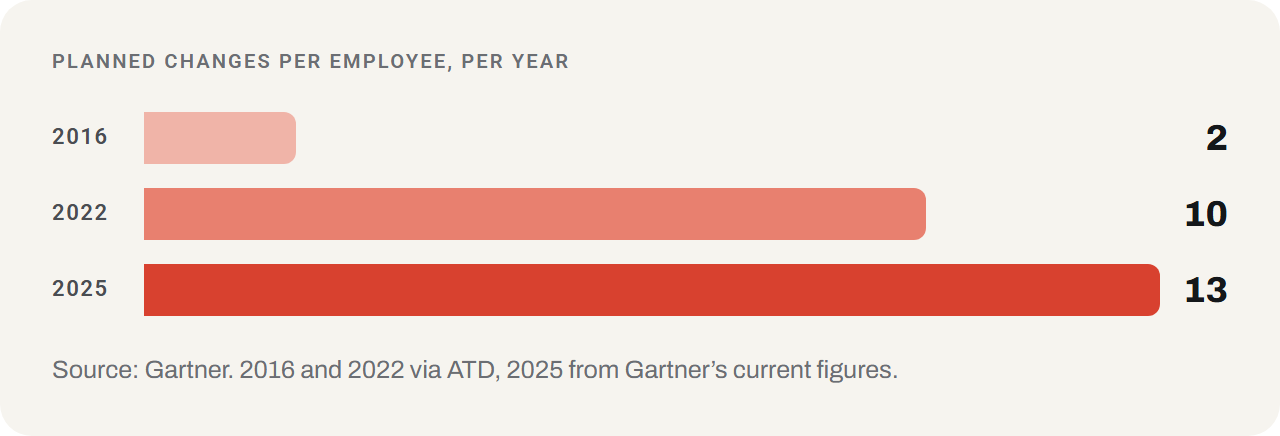
That's more than one a month. Change used to be a project with a start and an end. Now it's the weather.
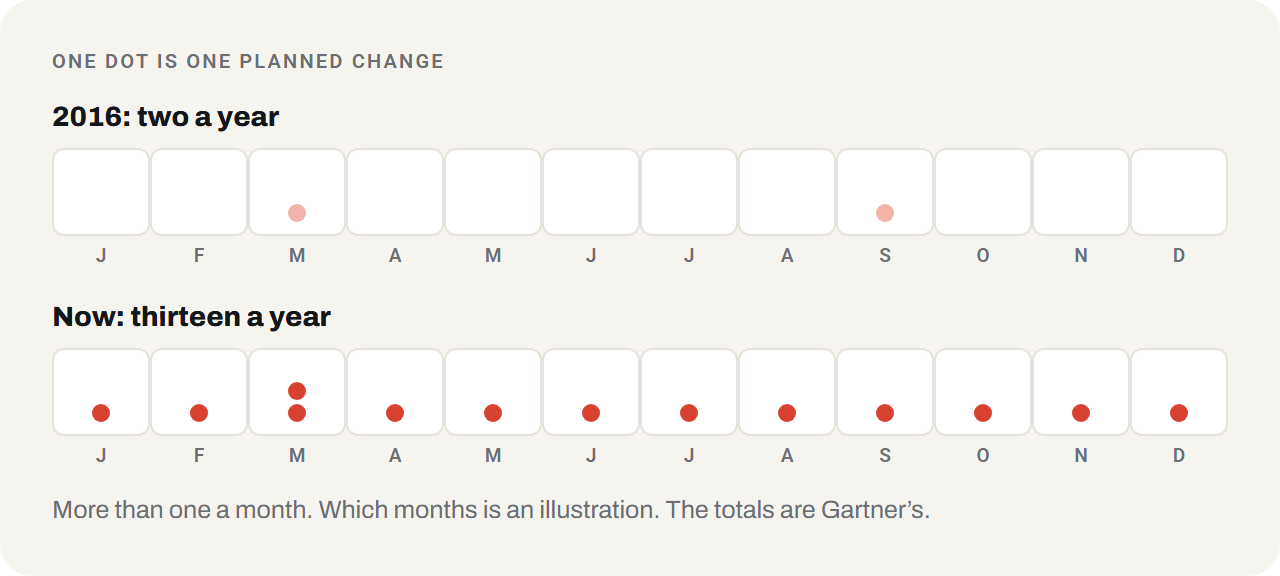
Change is arriving faster than most organisations can adapt to it. And AI is about to make it worse.
Last week I wrote about the four people you're leading through AI. This week is about how much you're asking of them.
What do 13 changes ask of people?
Every change means learning something. A new system, a new manager, a new process, new rules about what you can paste into a chatbot.
The changes don't queue politely either. They stack. The new system lands in the same month as the restructure, and nobody has finished learning the last one.
Change managers have a name for this: change saturation. Prosci, a change management research company, puts it simply: "When change disruption is greater than change capacity, an organization faces change saturation." In plain words, more change is landing than people can absorb.
Deloitte's 2026 survey found that about a third of workers went through 15 or more major changes in the past year. Only 27% of the leaders surveyed think their organisation manages change well.
What does all that change cost?
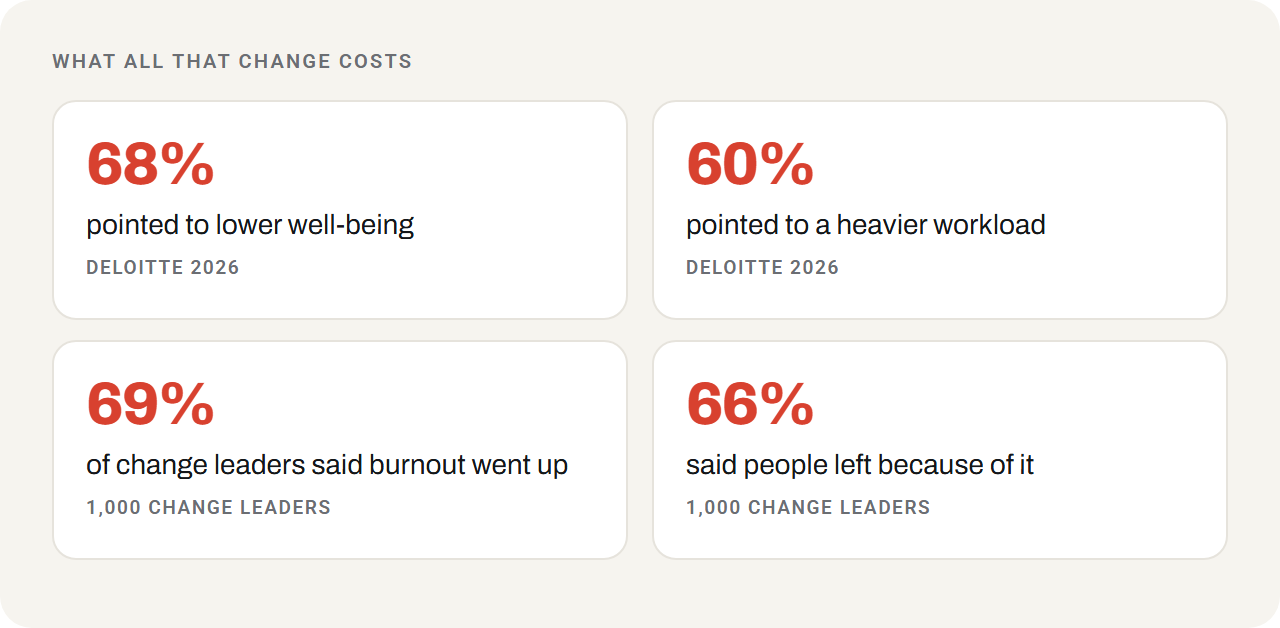
The bill shows up in people. Asked about the effects of all that change, 68% of respondents in the same Deloitte survey pointed to lower well-being, and 60% to a heavier workload.
A second study of 1,000 change leaders, Australia included, found 69% said their last change raised workload and burnout. 66% said people left the company because of it.
Gartner adds that only 32% of leaders get their people to adopt change in a healthy way. The rest get the change, plus a tired team.
Why does AI make it worse?
Gartner says technology changes are now front and centre of the changes hitting employees. AI is the fastest moving of them.
A normal system rollout happens once. An AI tool keeps changing after you've rolled it out. New models arrive every few weeks, the tool your team learned in March behaves differently by June, and the rules about what's allowed are still being written.
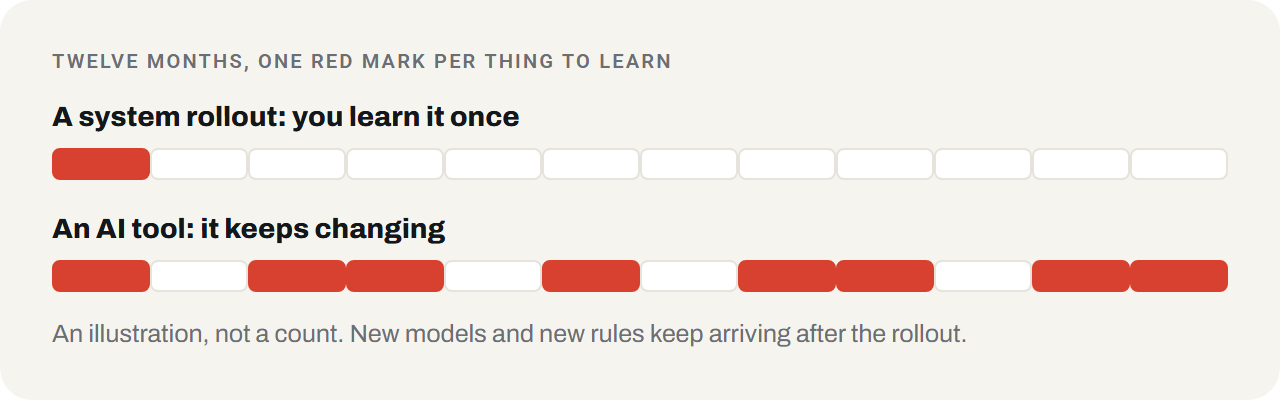
Each of those is another change for someone to learn. And as last week's issue showed, people take them in very differently. The curious are already three versions ahead. The hesitant are still deciding whether to trust the first one.
Why can't the training manual keep up?
Most of that learning doesn't happen in a course. In a June survey of 1,500 US workers and managers, 53% said they learn new skills by doing the work and figuring it out themselves. 44% said work priorities push learning aside. Only 16% said skill building happens quickly when something new comes up.
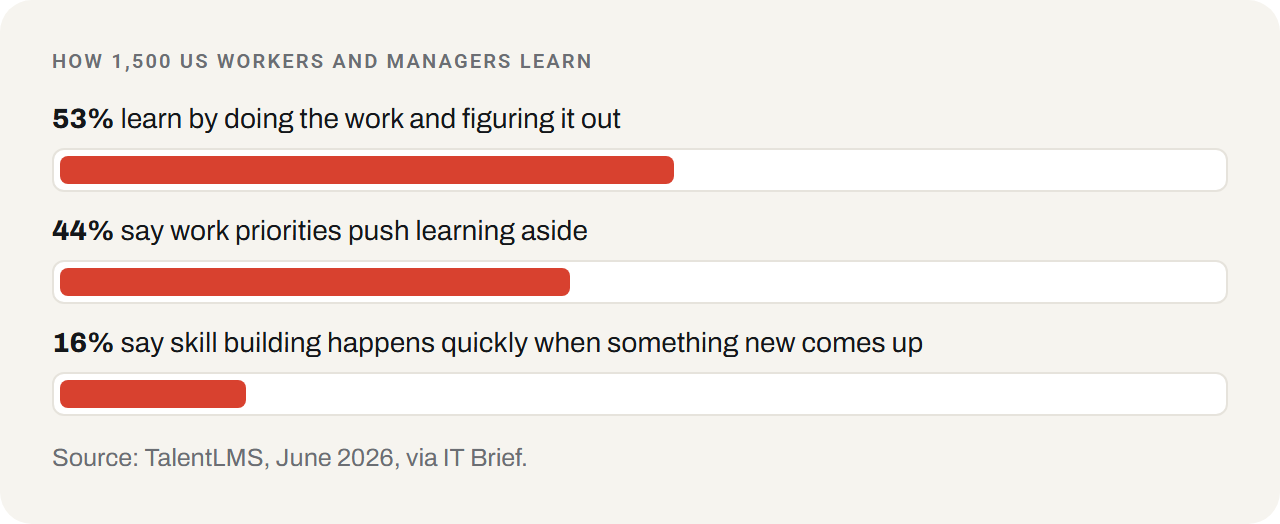
The manual, and the learning system where your compulsory courses live (often called an LMS), were built for two changes a year. Not 13.
What do I keep hearing from leaders?
This year I've had dozens of conversations with people who lead teams, training and risk, from small businesses to some of Australia's largest employers. The same four things came up again and again.
- Nobody has told staff the rules for AI. One adviser described a large company that handed out new AI tools before anyone said how, or whether, to use them. People are asking for clear rules more than another course.
- The rules live in documents nobody can find. A PDF on the intranet, or nothing written down at all.
- Everyone is flat out. The day job wins, so learning waits until next quarter.
- Nobody trusts the AI answer on its own. Not until someone has checked it against the source.
How do you lead when change never stops?
None of this is new. Change teams have used it for years. It just gets skipped when each change looks small on its own.
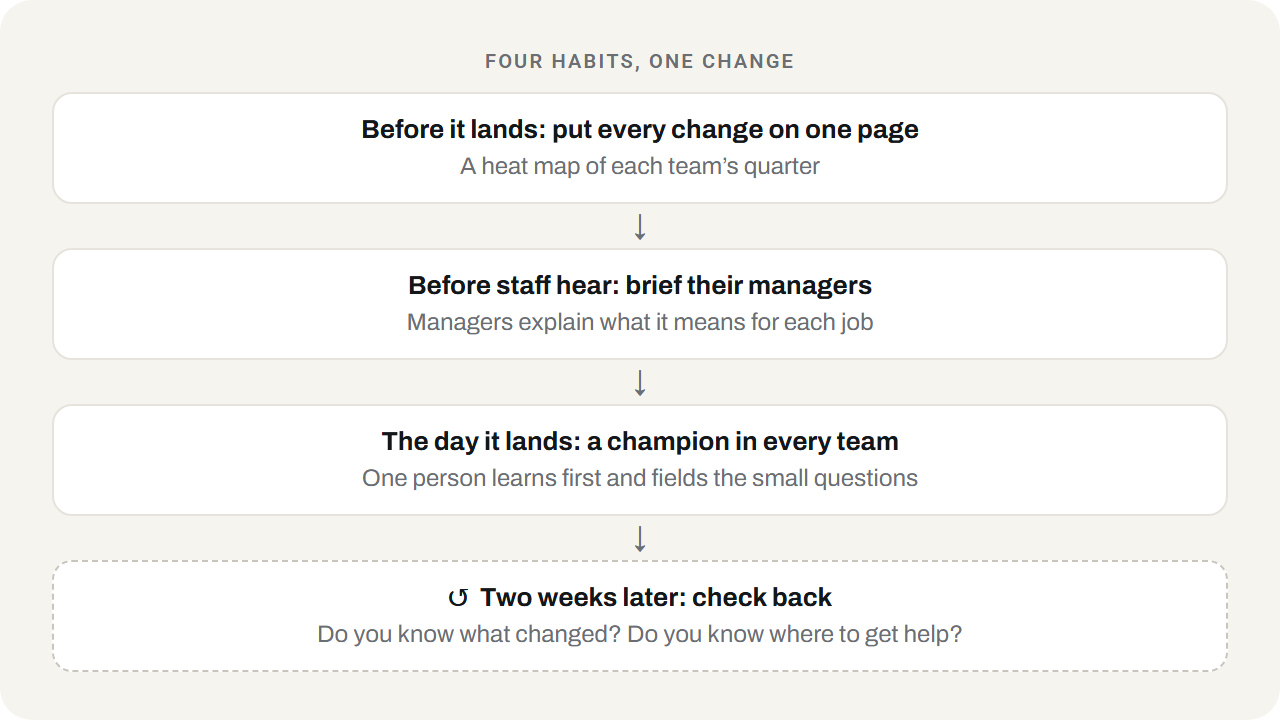
1. Put every change on one page
Change managers call it a heat map. List what's landing on each team this quarter and how heavy each one is. Two big changes hitting the same team in the same month is your early warning.
Prosci describes a heat map as "a visual representation of the change portfolio through the lens of a target group". In practice it's a grid: your teams down the side, the months across the top, and a number in each square for the changes landing there.
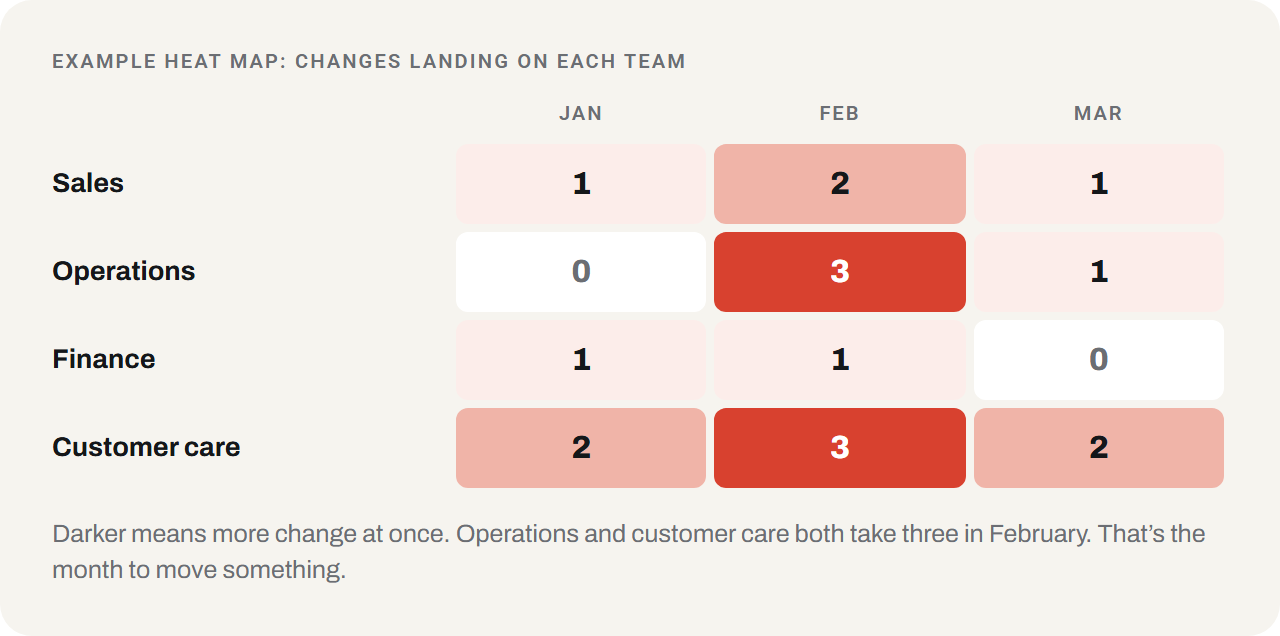
Start with the changes you know about. Then ask each team lead to fill in what you missed. When one square goes dark, move something to a quieter month.
2. Brief managers before staff
Prosci has studied this for years. People want the why from senior leaders, but how it affects their own job from their direct manager.
In Prosci's words: "Employees want to hear from senior leaders about the reasons for change and its alignment with company goals." And: "Employees prefer direct supervisors to communicate how changes will affect their roles and daily tasks."
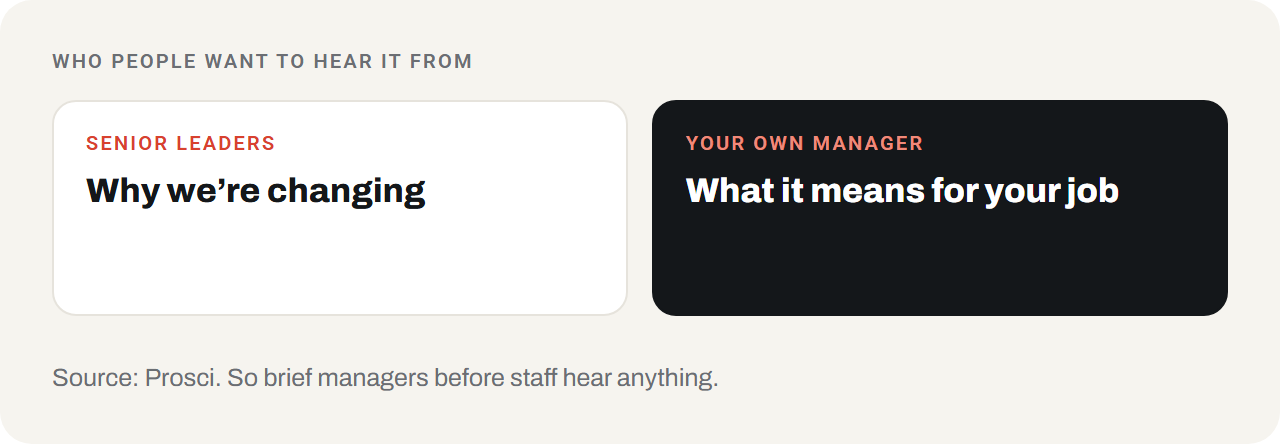
So give managers the answers first, including the awkward ones. A manager who hears the news at the same time as their team can't answer the question their team actually has.
3. Name a champion in every team
We talked about this last week. One person learns it first and fields the small questions. People ask the colleague next to them long before they open a manual.
Microsoft builds its own AI rollout guidance around a champions network. Its adoption guide says "Champions play an important role in turning AI adoption into new ways of working." Pick someone who is curious and trusted by the people around them, and give them time to learn it before everyone else.
4. Check back two weeks after it lands
Ask two questions: do you know what changed, and do you know where to get help? Two no's from the same team tell you where to send the champion next.
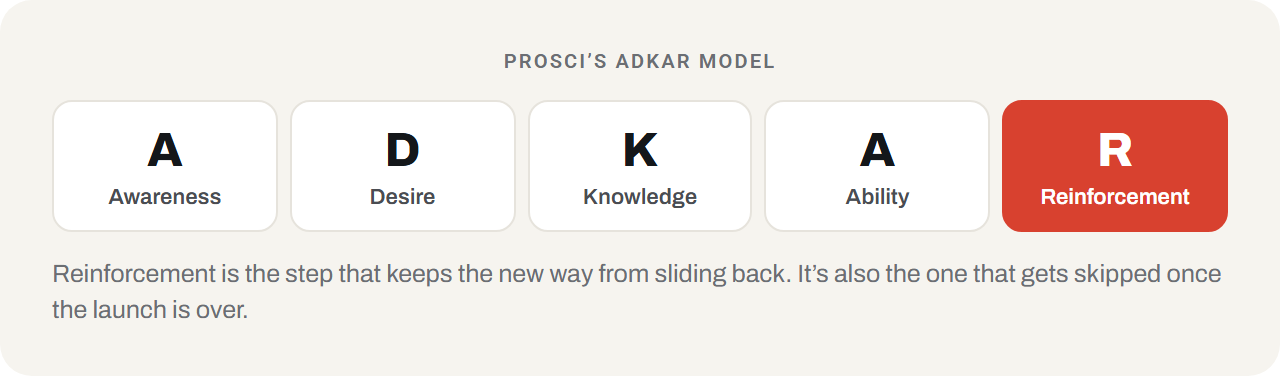
Prosci's ADKAR model (a five step change method) calls this last step reinforcement, and it's the easiest one to drop. Prosci sums up reinforcement as "Sustain the new way and prevent backsliding."
Where does AI fit?
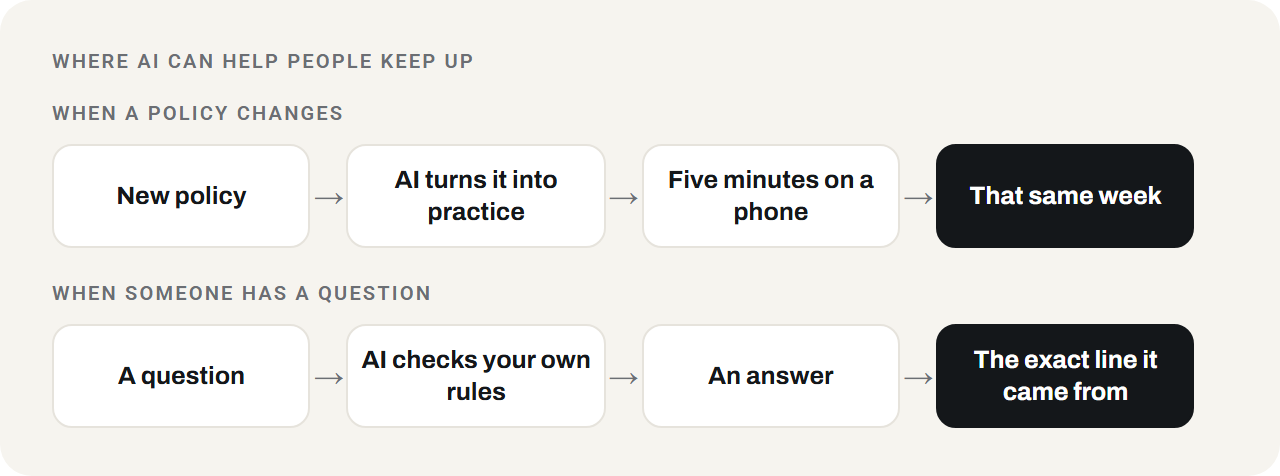
Here's the twist. The same AI that's speeding up change can help people keep up with it.
It can turn a policy document into five minutes of practice on a phone, the week the policy changes. It can answer a question from your own rules and show the exact line the answer came from, so nobody has to take it on trust.
That's the space I've been building in for the past few months, with some of the people above. More on that soon.
What it means for you: count the changes your team is living through this quarter. Then ask how each one was taught. If the answer is an email and a PDF, start there.
Common questions
How many changes does the average employee go through? Gartner puts it at 13 planned changes a year. In 2016 it was two.
What is change saturation? More change landing on people than they can absorb. Prosci defines it as change disruption being greater than change capacity.
What is a change heat map? A grid with your teams down one side and the months across the top, showing how much change is landing on each team each month. It shows where change is piling up before people feel it.
What is the ADKAR model? Prosci's model of how one person moves through a change, in five steps: Awareness, Desire, Knowledge, Ability and Reinforcement.
What is a change champion? One person in each team who learns a new tool or process first and helps the people around them with it. Microsoft's guidance for rolling out its AI tools is built around them.
Sources and further reading
- Gartner, 13 changes a year.
- ATD, the training association, Gartner's 2016 and 2022 figures.
- Gartner, technology changes front and centre, webinar summary, 7 February 2025.
- Gartner, 32% get healthy adoption.
- Deloitte, Human Capital Trends 2026, the adaptable workforce chapter.
- HRD Australia, the study of 1,000 change leaders.
- IT Brief, the TalentLMS survey of 1,500 workers and managers, 19 June 2026.
- Prosci, Introduction to change portfolio management (heat maps, change saturation).
- Prosci, Why some communications work and others don't.
- Prosci, The ADKAR model.
- Microsoft, Define your AI Champion role and charter.
More on how I work: AI consulting in Sydney, and what an AI consultant costs in Australia.