What kind of model is GPT-6 Astra?
Frontier models launch as opportunity models and end up efficiency models. Astra rebuilt my 2011 building, and the tables show which model does which job.

OpenAI shipped GPT-6 Astra in early September 2026, and the internet spent the weekend arguing about whether it counts as AGI. I am not going to have that argument. The more useful question is what kind of model it is.
All frontier model releases are opportunity models, and end up being efficiency models. A model launches doing something nobody could do before, everyone loses their minds, and within a year it is the cheap thing you route your boring work to. The one exception I can think of is DeepSeek's R1, which turned up already cheap and blew up the price of everything rather than the ceiling of what was possible.
What is the difference between an opportunity model and an efficiency model?
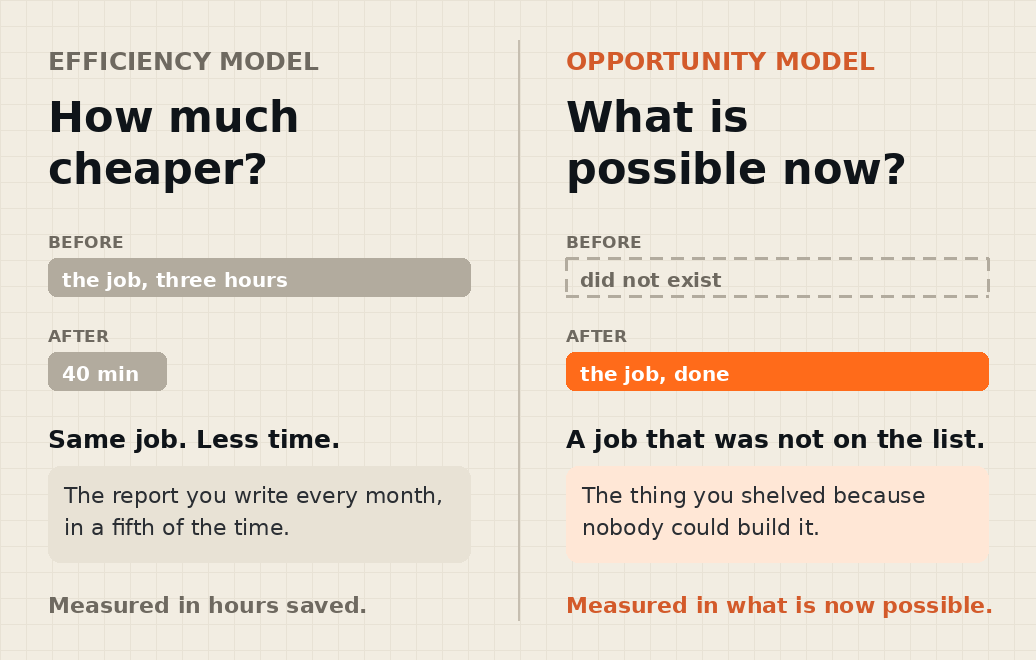
An efficiency model is judged on cost per task: it does a job you already do, faster or cheaper. An opportunity model is judged on whether the job was possible at all. Same technology, completely different purchase decision.
Astra is at the top of that cycle. It is an opportunity model. The question it answers is not how much cheaper, it is what can I do now that I could not do before. So I spent a weekend pointing it at a job I had not been able to do for fourteen years.
What did Astra build from a building I drew in 2011?
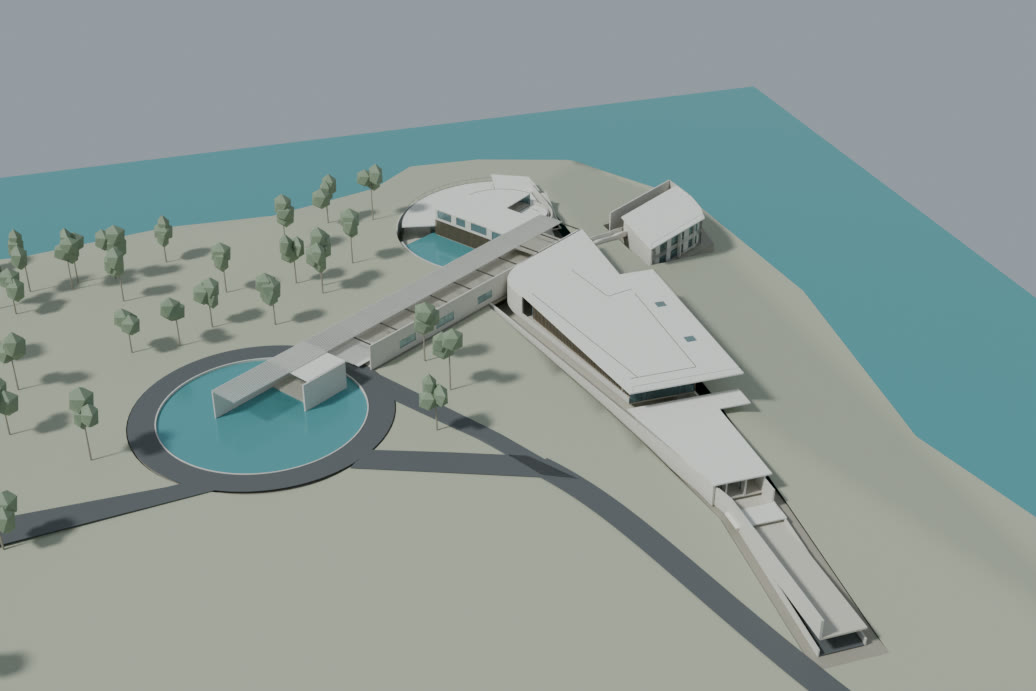
My final-year architecture project, drawn on a machine that took all night to render one image. I gave Astra three plans and three sections, nothing three-dimensional, and asked for three things back: the building, a website and a demo video.
It returned a working model of 2,037 objects, sorted into collections named after the building's actual programme. You can walk the whole thing yourself.
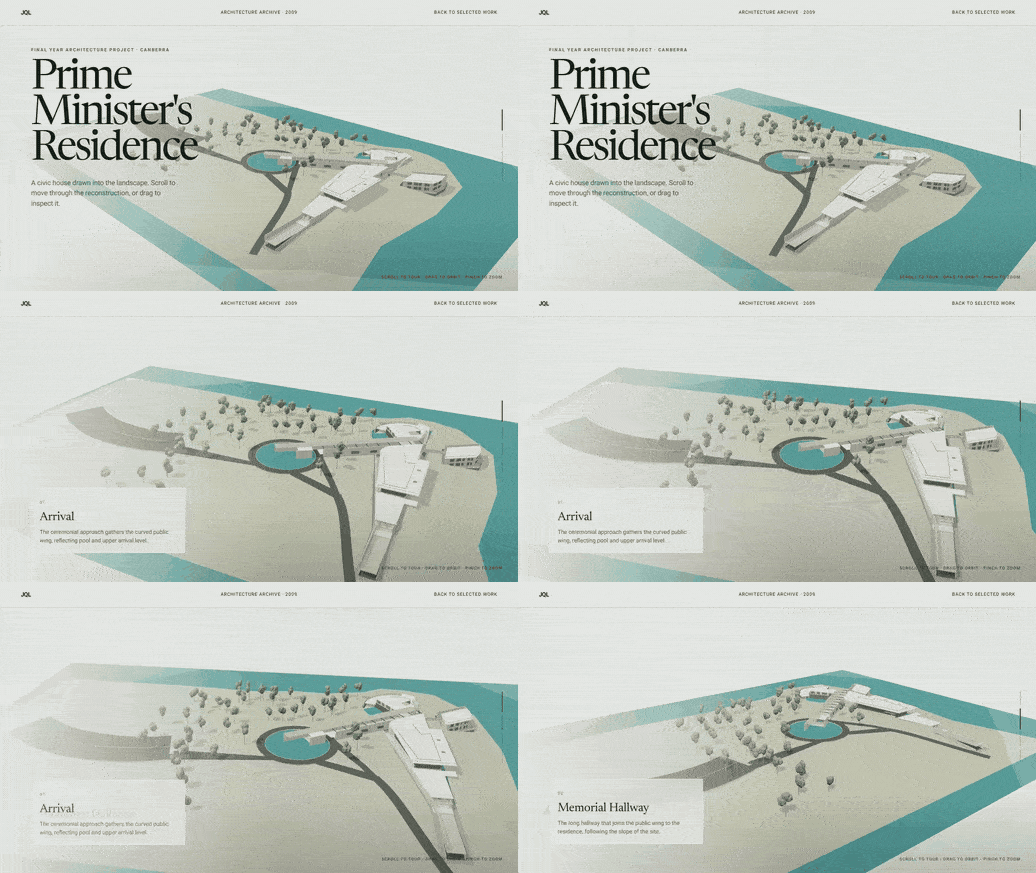
An efficiency model would have helped me draw faster. This did a job I stopped being able to do fourteen years ago.
My honest reaction: heck yeah, this is very cool, and how does this create value for me? I suspect a lot of people land in the same place, so here is my answer.
What should you do with an opportunity model?
Ask what is on your shelf. Mine was a skill I had not used in ten years. Yours is more likely a product you costed and killed, a service you could not staff, or the thing you tell people you would do if you had the team. Some of those got cheap this year. Depending on the job, really cheap.
That is what opportunity models are for. I use them for planning, concepts and brainstorming, and if you write code they are phenomenally good at holding a long, complex build together. Two warnings from experience: watch your tokens, and beware prompt purgatory, the afternoon you lose rewording the same instruction instead of stopping to work out what you actually want.
Efficiency models are for everything else, which is most of your week.
Which models are opportunity models, and which are efficiency models?
As of September 2026, and all of them models I have used. Worth clearing up first: ChatGPT is not a model, it is the harness. Astra and Sol sit inside it, the same way Fable and Sonnet sit inside Claude.
| Model | Made by | Kind | Price | Reach for it when |
|---|---|---|---|---|
| GPT-6 Astra | OpenAI | Opportunity | Top of market | The job is long, multi step, and nobody has built it for you before |
| Fable 5.1 | Anthropic | Opportunity | Top of market | Deep code, careful builds, the work you cannot afford to get wrong |
| Sonnet 5 | Anthropic | Efficiency | Mid to low | The sensible default for most day to day production work |
| Gemini 3.8 Flash | Efficiency | Low | Speed and volume, with a million tokens of context to read into | |
| DeepSeek V4, GLM 5.3, Kimi K3 | Chinese labs, open weights | Efficiency | Lowest | Most everyday work, at a fraction of the price. The only option where the weights can sit on your side of the fence |
How should you route work between them?
How I split it. E is efficiency, work you already do. O is opportunity, work that was not on the table.
| The job | Kind | What to point at it |
|---|---|---|
| A week of receipts and supplier invoices into the books | E | Cheapest thing available. This is typing, not thinking |
| The same twenty client questions, answered in your tone of voice | E | Cheapest capable model, pointed at the answers you have already written |
| A proposal that sounds like you and not like a template | E + O | Mid to frontier, plus every proposal you have ever sent as context |
| Reading fifteen years of files to answer something nobody could answer before | E + O | Big context and a frontier model. This is the archive job |
| The service you costed and killed because you could not staff it | O | An opportunity model, and a fortnight of your attention. This is the shelf |
| Anything touching money, health, the law or compliance | O | The best model you can get, and a named human signing it off. Here the cost of being wrong sets the budget |
The skill to learn this year is routing. Expensive model for the thinking, cheap model for the doing, something in the middle for most of it. Run everything through the priciest option and you pay ten times what you need to, and get worse results on the simple jobs. That is orchestration, and it is quietly becoming the whole game.
Are the open-weight Chinese models good enough?
For most everyday work, yes, and I say that having run them rather than just read the benchmarks. DeepSeek, GLM and Kimi handle the large majority of everyday efficiency work. The weights are published under permissive licences, so you can run them on your own machine, and once you do, that work costs you electricity and nothing else. The flagship-sized versions want serious hardware. The smaller releases run happily on a decent workstation.
Their hosted subscriptions surprised me more. Kimi and GLM give the GPT and Claude tiers a real run for their money at a fraction of the price. Not on the long agentic work, where the frontier still pulls away. But on the day to day it is far closer than the price gap suggests.
Common questions
Is GPT-6 Astra AGI? That argument is not worth having. The useful question is what kind of model it is: an opportunity model, judged on what it makes possible rather than on what it makes cheaper.
What is the difference between an opportunity model and an efficiency model? An efficiency model does a job you already do, faster or cheaper, and is judged on cost per task. An opportunity model does a job that was not possible before, and is judged on whether the job can be done at all.
Which AI model should I use for everyday work? An efficiency model. Sonnet 5 is the sensible default for most day to day production work, Gemini 3.8 Flash suits speed and volume, and the open-weight models from DeepSeek, GLM and Kimi handle most everyday work at a fraction of the price.
Can I run an open-weight model on my own computer? Yes. DeepSeek, GLM and Kimi publish their weights under permissive licences. The flagship-sized versions need serious hardware, but the smaller releases run on a decent workstation, and then the work costs electricity and nothing else.
The same question, what each model is actually for, runs through the JASON test, where every new model gets the same brief. If you would rather build a system around these models than read about them, the free course comes with the newsletter.
This started life as Build Notes Nº 04, sent on 11 September 2026.
Get the next one
Subscribe and get the free course, Build Your First AI Operating System. Then a few emails a month on what I build, including what didn't work. See the course