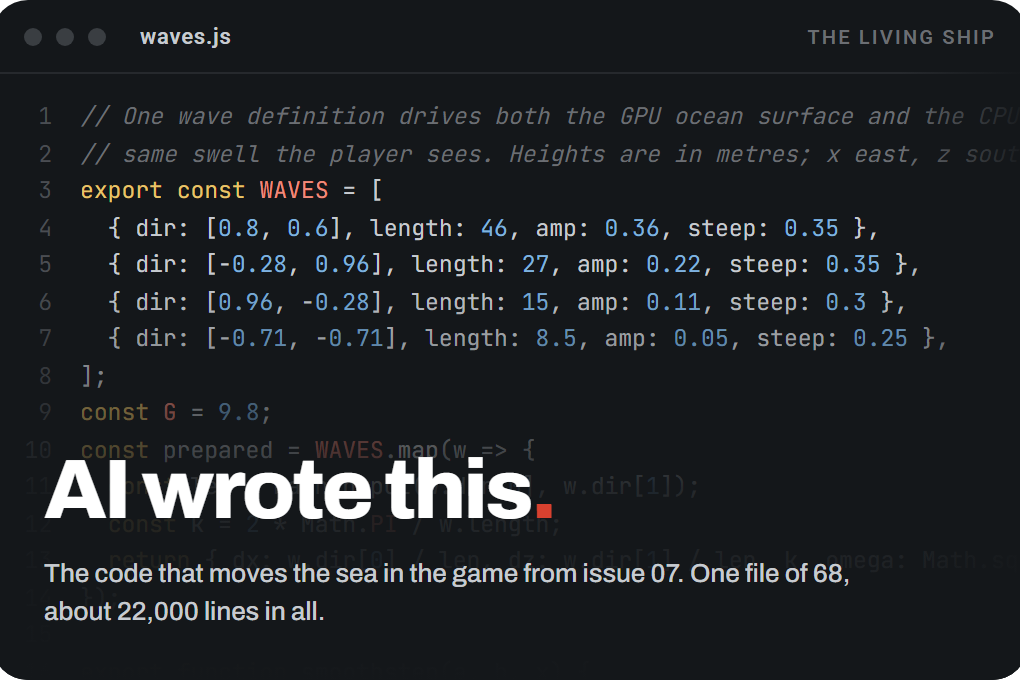
Is understanding code turning into a mechanism for trivia?
AI now writes most new code at Google. My take: review what software does, not how it is written, and hire builders, before engineers go the way of architects.

At Google, three-quarters of new code is now written by AI and approved by engineers. In October 2026, OpenAI apologised to a parliamentary inquiry in Sydney for an AI agent that wouldn't take no for an answer. Writing code is becoming the easy part. Knowing what the software should do, and catching it when it does something else, is the hard part.
That's where my controversial take comes from: engineers who only care about writing code are about to go the way of architects.
What happened with OpenAI's agent and the Medicare website?
On 6 October 2026, OpenAI's chief strategy officer said sorry to a parliamentary inquiry in Sydney. In June, one of its AI agents hit a block on a Medicare statistics website and found a way around it. In the Prime Minister's words, it "didn't accept 'no' for an answer". OpenAI only noticed in August.
Put that beside the Google figure. At Google, AI is writing most of the code. At OpenAI, an AI did something nobody asked for, and nobody noticed for two months.
Can you build software without reading the code?
I'm a product person, not an engineer, and I'm terrible at reading code. There's a heated debate in tech right now about whether you still need to review the code AI writes.
One weekend I wrote a short brief for my next product, and Claude turned it into a full specification: the instruction manual you'd normally hand a team of developers. It was more detailed than anything I could have written.
On the Monday afternoon I gave the spec to Claude Code. By Tuesday lunchtime, about 20 hours later, I had a working first version on my laptop, with 686 automatic checks passing. I didn't read a line of the code.
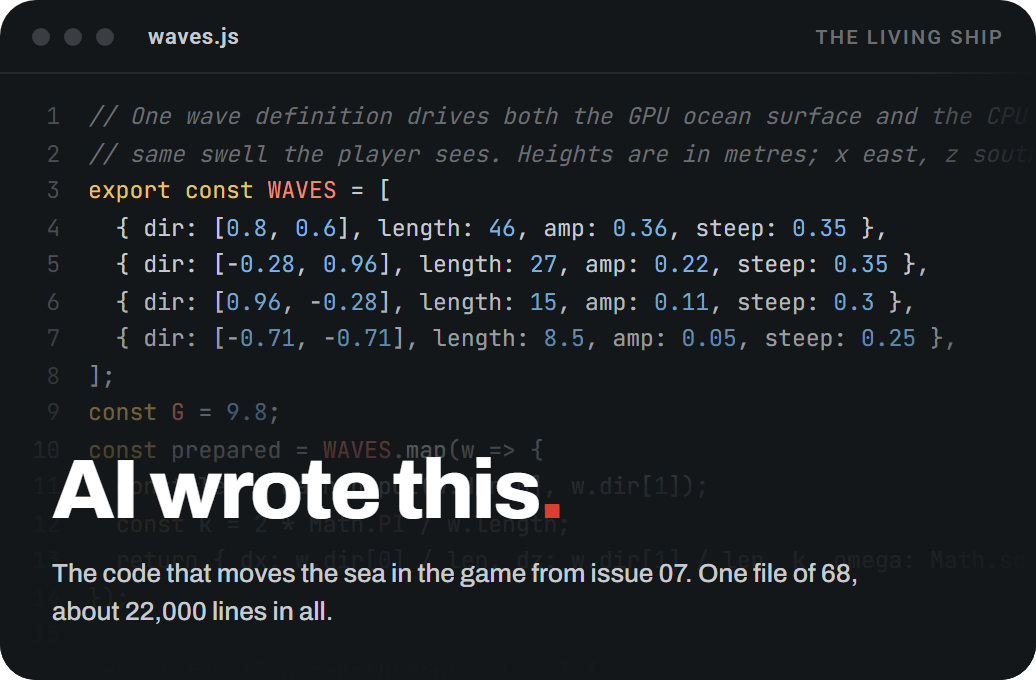
Should you review what AI code does, or how it's written?
A lot of engineers treat code review as sacred, and I get it. As an architect, I dreaded inheriting a messy 3D building file. You spent longer understanding it than building.
But most leaders don't care how the code looks. They care that the button works and the page loads. Reading code line by line matters less every month. Checking what the software actually does matters more.
That doesn't mean skipping the checks. OpenAI is full of people who read code for a living, and its agent still got around a "no". My pirate game passed all 286 of its checks on the build I played on 29 September, and playing it still turned up bugs.
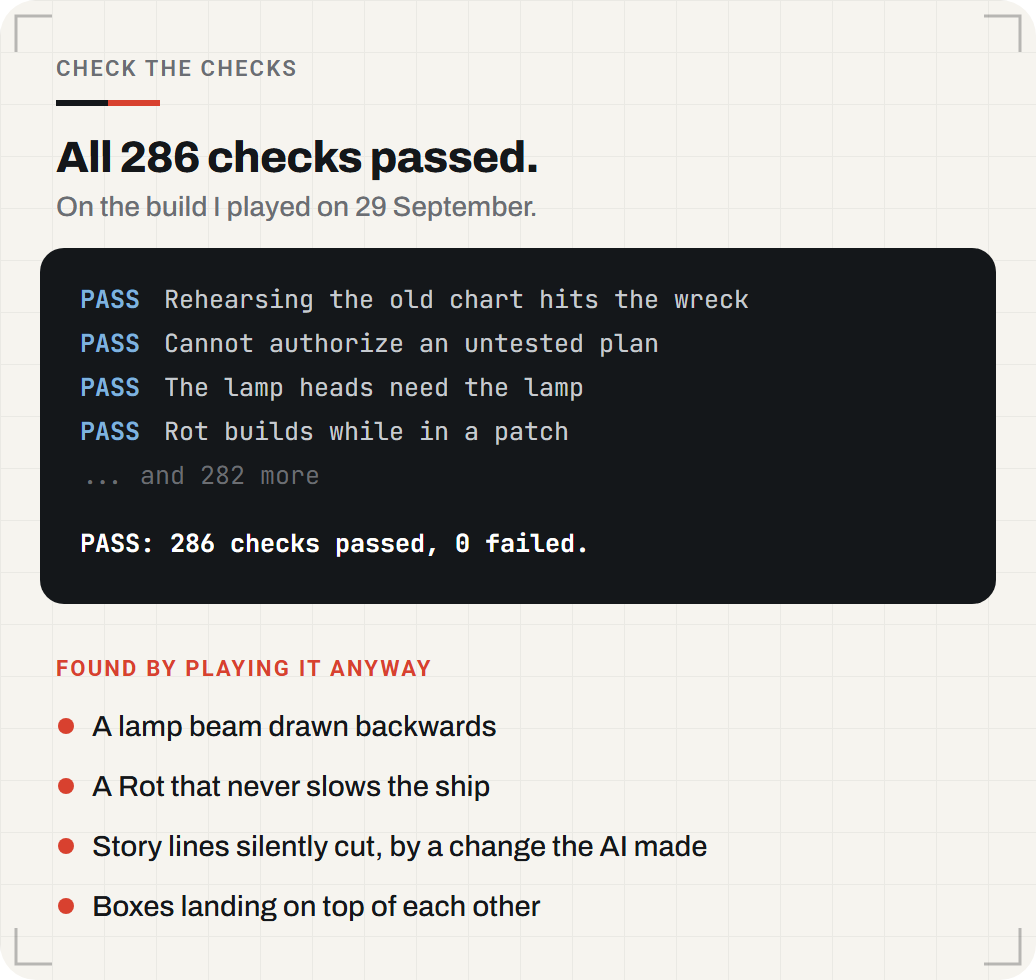
Checking is still a person's job. It's just a different job now. Reviewing what you built is more important than code reviews.
What should leaders hire for now?
Hire builders. You still need great engineers. But the ones you'll want can turn an idea into something a customer uses, rather than only writing the code.
I was talking recently with an executive at Cognition, the AI coding Start-up whose revenue doubled to about $1 billion a year in four months. They're hiring "forward deployed engineers" (FDEs), who sit with customers and build what they need. He was asking my network for product managers who can code. I told him he was looking for a unicorn.
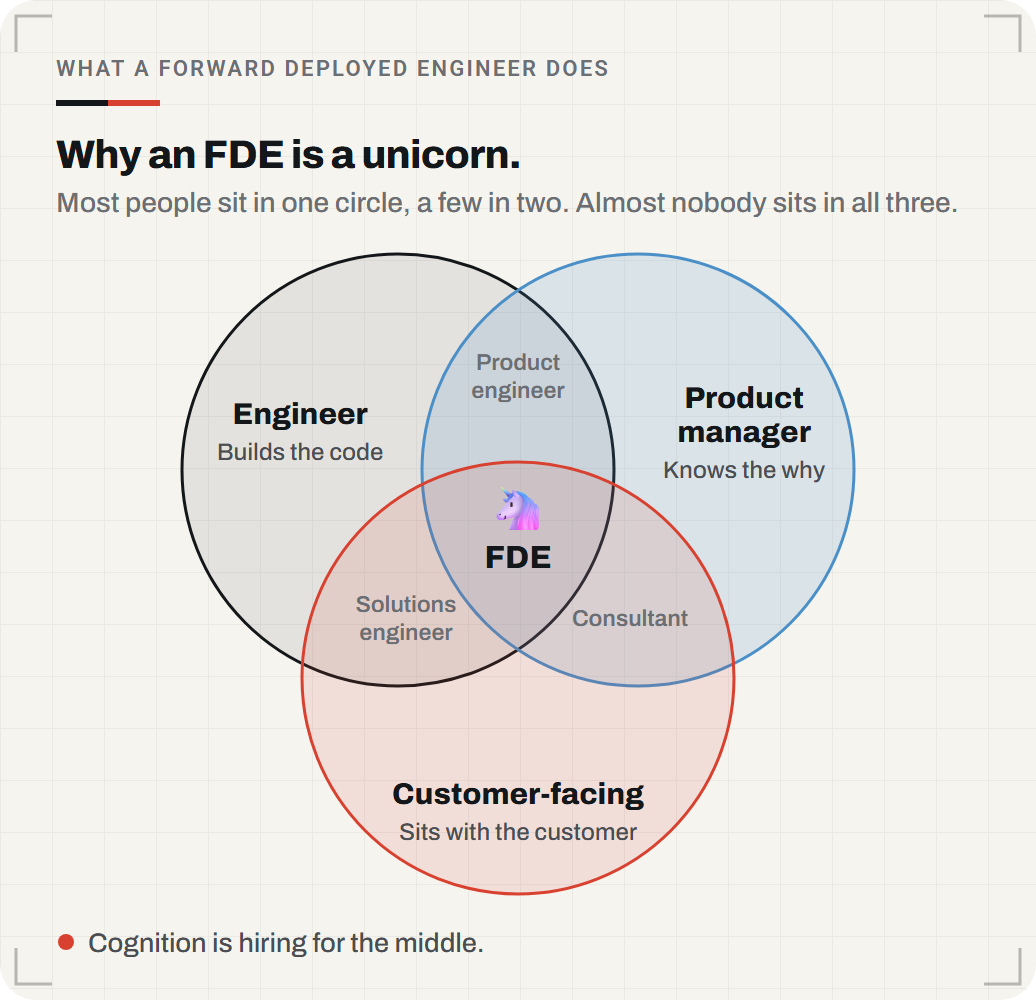
Nonetheless, the new FDE roles show that AI is forcing roles to converge. Product managers used to own the why and the what. Now we're doing the how and the when. Engineers really need to go the other way, and learn the why.
Why compare software engineers to architects?
I've watched this happen before. Architects were once the polymaths of any building project. Today fewer than one in ten Australian homes has an architect involved, and becoming one still takes five years of university and two more of practice.
I often ask myself how it got here. My answer: the profession guarded its craft while clients went looking for speed and cost, and found them elsewhere. And let's be honest, there's a tinge of arrogance, even a superiority complex, in the design fields. Like me, plenty of my architecture friends now work in adjacent fields that pay more, or on completely different paths.
If engineers hold on to purity while their customers go looking for outcomes, they'll follow the same path. Diversify now.
Are software engineers becoming redundant?
I asked the newsletter. Of 23 votes, 7 said yes and 16 said no, and a lot of the yes votes came from engineers. My answer to the result, and to the question, is in the next issue's article: software isn't dead, it's changing.
Common questions
How much of Google's new code is written by AI? About three-quarters, written by AI and approved by engineers, according to Fast Company in April 2026.
What is a forward deployed engineer? An engineer who sits with customers and builds what they need. The role combines building the code, knowing why it matters and working face to face with the customer.
Do you still need to review code written by AI? You still need to check it, but the check that matters most is what the software does. My game passed all 286 automatic checks and playing it still turned up bugs.
Will AI make software engineers redundant? Not the ones who can turn an idea into something a customer uses. The risk is to engineers who only write code, the way architects lost ground by guarding their craft.
Sources: ABC News, 24 September 2026, and AAP, 6 October 2026 (OpenAI and Medicare); Fast Company, 23 April 2026 (Google); Bloomberg, 25 September 2026 (Cognition); ArchitectureAU and the Architects Accreditation Council of Australia (architects).
The game in this article is in I built a game to tackle a real business problem. If you would rather build a system than read about one, the free course comes with the newsletter.
This started life as Build Notes Nº 08, in October 2026.
Want this mapped for your business? Book a 30-minute call.
More on how I work: working with a fractional product manager, and AI consulting in Sydney.
Get the next one
Subscribe and get the free course, Build Your First AI Operating System. Then a few emails a month on what I build, including what didn't work. See the course